
$30.00 Original price was: $30.00.$15.00Current price is: $15.00.
5 in stock
Type: Common Fig (Does Not Require Pollination)
KTJ, also known as Kafe Te Jiate, is a rare Albanian fig variety celebrated for its stunning striped appearance, exceptional sweetness, and reliable productivity. Widely regarded as one of the finest honey figs available, KTJ has earned a devoted following among collectors and fig enthusiasts who appreciate both beauty and flavor.
Originating from Albania, the name Kafe Te Jiate roughly translates to “Long Coffee,” a reference to the fruit’s elegant elongated shape and pronounced neck. The variety is sometimes compared to Flanders due to similarities in appearance and flavor, though KTJ has established its own reputation as a premier collector fig.
The fruit is medium to large in size with a distinctive teardrop shape and extended neck. One of its most striking characteristics is the skin coloration. As the fruit ripens, a golden-yellow background becomes highlighted by bold violet to purple striping, creating one of the most beautiful figs in cultivation.
Inside, KTJ reveals a rich amber-golden interior that may develop subtle pink tones. The flesh is smooth, dense, and creamy with relatively few seeds, producing an exceptional texture that melts in the mouth.
The flavor is outstanding. KTJ is known for intense honey sweetness layered with notes of caramel, light berry, and subtle complexity. A touch of acidity balances the richness and keeps the fruit from becoming overly sweet. Many growers consider it one of the highest-quality honey figs they have ever tasted.
This variety is also known for developing very high sugar levels, making it an excellent fresh-eating fig while also performing beautifully when dried.
KTJ is highly productive and produces both a breba crop and a main crop. The breba figs are often larger and arrive earlier in the season, while the main crop develops even greater sweetness and flavor concentration as the summer progresses.
The tree is vigorous, roots readily from cuttings, and performs well both in containers and in-ground plantings. Its productivity and adaptability make it an excellent choice for growers of all experience levels.
The elongated neck of the fruit also contributes to good rain resistance by helping reduce splitting and moisture accumulation during ripening.
As a common fig, KTJ does not require pollination and reliably produces fruit in areas where the fig wasp is not present.
Its combination of Albanian heritage, spectacular striped fruit, exceptional honey flavor, and dual-crop productivity has helped establish KTJ as one of the most desirable honey figs available today.
For growers seeking a beautiful fig with world-class sweetness and collector appeal, KTJ is an outstanding addition to any collection.
USDA Zones 7-10
Don’t let the growing zones discourage you. Fig trees can be successfully grown in containers and many growers enjoy fresh figs well outside the recommended zones. Growing in a pot allows you to move the tree to a protected location during winter and control its size. With proper care and winter protection, many fig varieties can be grown and fruited outside their listed growing zones.
During the winter months, cuttings will typically be fully dormant.
During the fall, cuttings may still be lignified (hardened woody growth) and may not yet be fully dormant. This is normal and does not affect their ability to root.
Wood color, thickness, bud spacing, and appearance will naturally vary from cutting to cutting. Certain varieties naturally produce thinner or thicker wood than others.
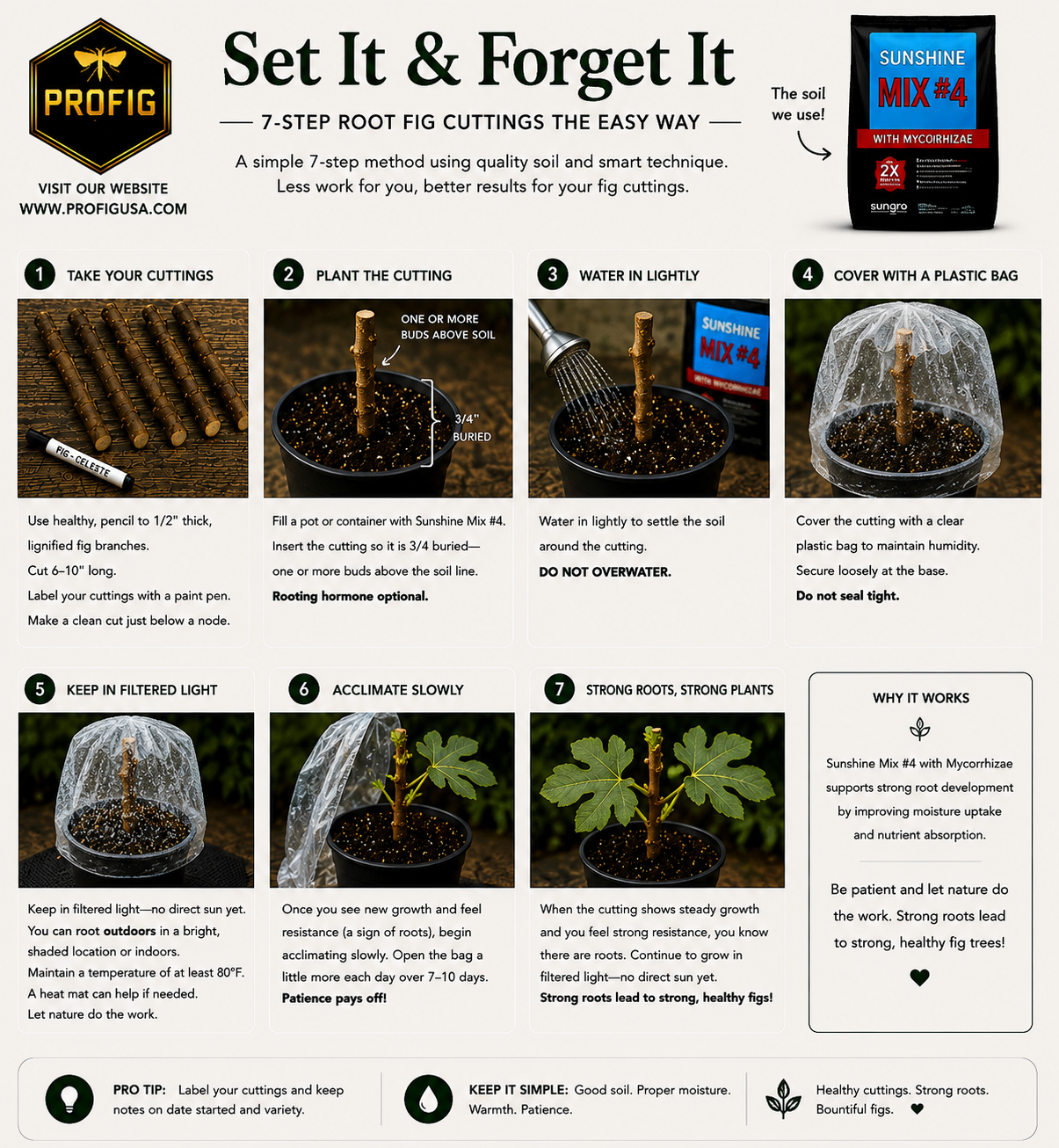
Rooting instructions are included in the listing photos. Please review them before purchasing.
Rooting success depends on many factors including temperature, humidity, rooting method, growing medium, sanitation, and grower experience.
While fig cuttings are generally considered easy to propagate, no rooting success can be guaranteed. Even experienced growers may experience occasional losses.
Most growers can expect a rooting success rate of approximately 60% to 80% under proper conditions. Individual results may vary.
Because rooting conditions are beyond our control after delivery, we cannot offer refunds, replacements, or credits for cuttings that fail to root.
Cuttings are carefully packaged to help ensure they arrive in excellent condition.
Thank you for supporting ProFig.
Only logged in customers who have purchased this product may leave a review.


Reviews
There are no reviews yet.