Pel de Bou Fig Cutting
Type: Common Fig (Does Not Require Pollination)
About This Variety
Pel de Bou is a unique and highly productive fig variety originating from Mallorca in Spain’s Balearic Islands. Preserved through the collection efforts of renowned fig expert Montserrat Pons, this distinctive variety is prized for its early ripening fruit, exceptional productivity, rain resistance, and unusual hairy skin.
The name Pel de Bou translates from Catalan as “Oxhide,” a reference to the fruit’s noticeably rough and fuzzy exterior. This distinctive characteristic immediately sets it apart from most other fig varieties and makes it easily recognizable among collectors.
The tree is moderately vigorous with dense foliage and a productive growth habit. Mature trees develop a full canopy and consistently produce abundant crops of high-quality fruit. Its reliable performance has made it a respected variety among growers throughout Mediterranean climates.
Pel de Bou is a bibera fig, producing two crops each season. The breba crop typically ripens in early summer, while the main crop begins around mid-August and continues into the late season. This extended production period provides growers with multiple harvest opportunities throughout the year.
The fruit is medium-sized and pear-shaped, with attractive earthy tones ranging from light yellow and tan to light brown as it ripens. The skin is thin but rough and hairy, a feature that inspired the variety’s name and contributes to its unique appearance.
Inside, the fruit reveals a beautiful brown to bright red interior. The flesh is juicy, moderately soft, and loaded with sugars that create a rich, jam-like eating experience.
The flavor is sweet, rich, and satisfying, combining concentrated sugars with classic fig character. Fully ripe fruit develops a dense, jammy texture that makes it especially enjoyable fresh from the tree.
One of Pel de Bou’s most desirable traits is its short hang time. Once the fruit begins changing color, it quickly reaches maturity, reducing exposure to rain, insects, and wildlife. This characteristic makes it particularly valuable in humid climates where prolonged ripening periods can be problematic.
The variety also demonstrates excellent resistance to rain, splitting, and ostiole-related issues, helping maintain fruit quality during challenging weather conditions.
As a common fig, Pel de Bou does not require pollination and reliably produces fruit in areas where the fig wasp is not present.
Its combination of Mallorcan heritage, unusual appearance, early ripening, rain resistance, and excellent productivity has helped establish Pel de Bou as one of the more distinctive varieties from the Balearic Islands.
For growers seeking a unique, productive fig with excellent weather resistance and sweet jammy flavor, Pel de Bou is an outstanding addition to any collection.
Recommended Growing Zones
USDA Zones 7-10
- Rare Mallorcan heirloom variety
- Preserved by Montserrat Pons
- Produces both breba and main crops
- Distinctive hairy “oxhide” skin
- Pear-shaped fruit
- Brown to bright red interior
- Sweet jammy flavor
- Short hang time
- Rain and splitting resistant
- Common fig requiring no pollination
Don’t let the growing zones discourage you. Fig trees can be successfully grown in containers and many growers enjoy fresh figs well outside the recommended zones. Growing in a pot allows you to move the tree to a protected location during winter and control its size. With proper care and winter protection, many fig varieties can be grown and fruited outside their listed growing zones.
You Will Receive
- One unrooted fig cutting
- Approximately 6-8 inches long
- Minimum of 3 buds (nodes)
- Thickness will typically range from Sharpie-marker size or larger unless otherwise noted in the listing
- Taken from a healthy, mature tree
Seasonal Appearance
During the winter months, cuttings will typically be fully dormant.
During the fall, cuttings may still be lignified (hardened woody growth) and may not yet be fully dormant. This is normal and does not affect their ability to root.
Wood color, thickness, bud spacing, and appearance will naturally vary from cutting to cutting. Certain varieties naturally produce thinner or thicker wood than others.
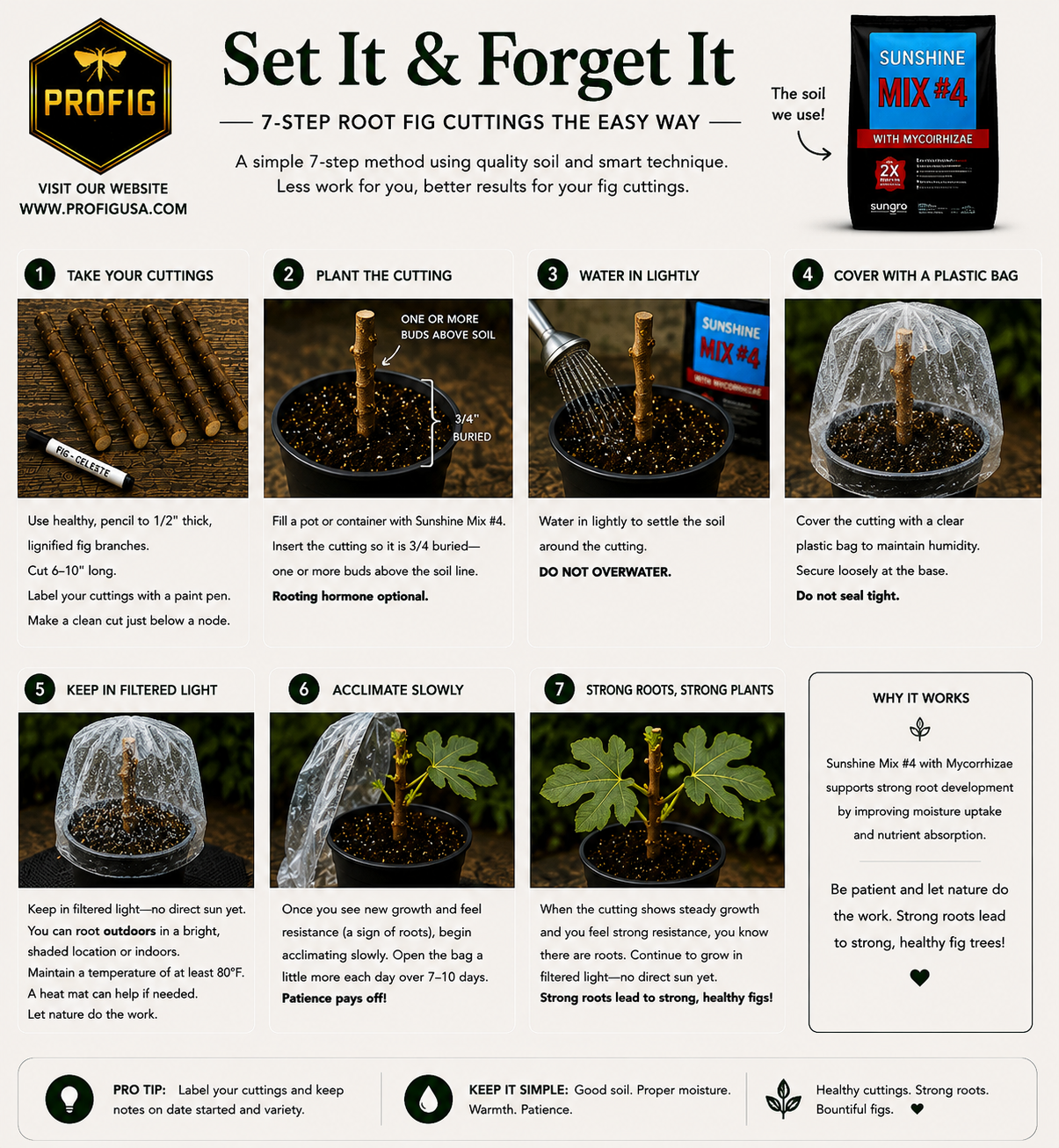
Rooting Instructions
Rooting instructions are included in the listing photos. Please review them before purchasing.
Propagation Disclaimer
Rooting success depends on many factors including temperature, humidity, rooting method, growing medium, sanitation, and grower experience.
While fig cuttings are generally considered easy to propagate, no rooting success can be guaranteed. Even experienced growers may experience occasional losses.
Most growers can expect a rooting success rate of approximately 60% to 80% under proper conditions. Individual results may vary.
Because rooting conditions are beyond our control after delivery, we cannot offer refunds, replacements, or credits for cuttings that fail to root.
Important Information
- This listing is for one unrooted fig cutting
- No roots, leaves, or pot are included
- Cuttings may vary slightly in thickness and appearance
- Cuttings are selected for propagation and are not guaranteed to be identical in diameter or shape
- We recommend rooting cuttings as soon as possible after arrival
Shipping
Cuttings are carefully packaged to help ensure they arrive in excellent condition.
Thank you for supporting ProFig.




Reviews
There are no reviews yet.