Description
Dauphine Fig Cutting
Type: San Pedro Fig
About This Variety
Dauphine, also known as Violette Dauphine, is one of the most historic and widely celebrated French fig varieties. Cultivated for centuries throughout France, including the gardens of Versailles, this remarkable fig is prized for its enormous fruit, exceptional productivity, and beautiful ornamental appearance.
Originally grown near Paris and throughout Provence, Dauphine became one of the most important traditional French figs and was later introduced to California during the late 1800s. It has since proven itself well adapted to many warm climates and remains a favorite among collectors seeking large, attractive fruit.
One of the defining characteristics of Dauphine is its ability to produce two crops each year. The breba crop develops on the previous season’s wood and is often enormous, with individual fruits sometimes exceeding half a pound under ideal conditions. The main crop follows later in the season on new growth.
The breba figs are among the largest produced by any fig variety. The fruit develops attractive red to dark brown skin and can contain amber to pink-colored flesh. Many growers describe the flavor as sweet and juicy with notes of honey, cane sugar, molasses, and even hints of tropical fruit.
The later main crop is somewhat smaller but equally attractive. Fruits develop darker brown to purplish coloration with pink to strawberry-colored flesh. The pulp is juicy, sweet, and refreshing, making it excellent for fresh eating.
The fruit itself is large, slightly flattened, and beautifully ribbed. The glossy skin and colorful interior make Dauphine one of the most visually appealing figs available. Because of its size and appearance, it is frequently used for fresh eating, preserves, gourmet presentations, and decorative fruit displays.
The tree is vigorous and attractive, developing large three- to five-lobed leaves and a graceful structure with upright growth and slightly drooping outer branches. Even when not fruiting, Dauphine serves as an ornamental focal point in the landscape.
Dauphine thrives in full sun and well-drained soils and adapts to a wide range of growing conditions. Once established, it becomes a productive and rewarding tree capable of producing impressive crops of giant fruit.
As a San Pedro fig, Dauphine produces a reliable breba crop without pollination. In areas where the fig wasp is present, the main crop may be retained and mature successfully. In areas without the fig wasp, growers often enjoy Dauphine primarily for its exceptional breba crop.
Its combination of French heritage, giant fruit size, dual-crop potential, and outstanding ornamental value has helped establish Dauphine as one of the most famous fig varieties in cultivation.
For growers seeking a historic fig with massive fruit and proven performance, Dauphine is an outstanding addition to any collection.
Recommended Growing Zones
USDA Zones 7-10
- Historic French heirloom variety
- Also known as Violette Dauphine
- Cultivated near Versailles and throughout France
- San Pedro type fig
- Produces enormous breba figs
- Attractive pink to strawberry-colored flesh
- Sweet honey-like flavor
- Excellent fresh eating and preserves
- Beautiful ornamental foliage
- Highly productive
Important: Dauphine is a San Pedro fig. The breba crop does not require pollination. The main crop may require pollination by the fig wasp in order to mature successfully.
Don’t let the growing zones discourage you. Fig trees can be successfully grown in containers and many growers enjoy fresh figs well outside the recommended zones. Growing in a pot allows you to move the tree to a protected location during winter and control its size. With proper care and winter protection, many fig varieties can be grown and fruited outside their listed growing zones.
You Will Receive
- One unrooted fig cutting
- Approximately 6-8 inches long
- Minimum of 3 buds (nodes)
- Thickness will typically range from Sharpie-marker size or larger unless otherwise noted in the listing
- Taken from a healthy, mature tree
Seasonal Appearance
During the winter months, cuttings will typically be fully dormant.
During the fall, cuttings may still be lignified (hardened woody growth) and may not yet be fully dormant. This is normal and does not affect their ability to root.
Wood color, thickness, bud spacing, and appearance will naturally vary from cutting to cutting.
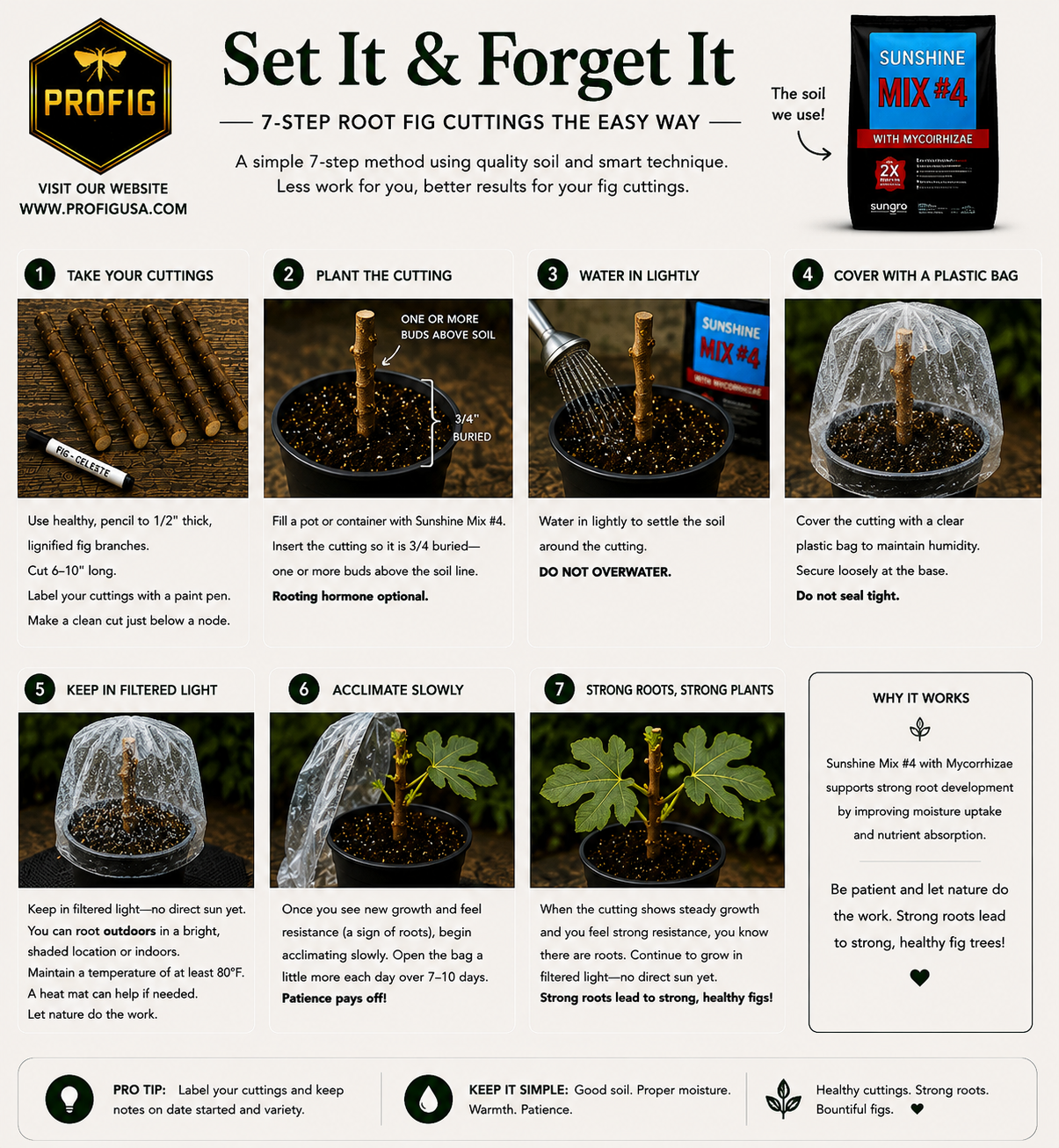
Rooting Instructions
Rooting instructions are included in the listing photos. Please review them before purchasing.
Propagation Disclaimer
Rooting success depends on many factors including temperature, humidity, rooting method, growing medium, sanitation, and grower experience.
While fig cuttings are generally considered easy to propagate, no rooting success can be guaranteed. Even experienced growers may experience occasional losses.
Most growers can expect a rooting success rate of approximately 60% to 80% under proper conditions. Individual results may vary.
Because rooting conditions are beyond our control after delivery, we cannot offer refunds, replacements, or credits for cuttings that fail to root.
Shipping
Cuttings are carefully packaged to help ensure they arrive in excellent condition.
Thank you for supporting ProFig.




Reviews
There are no reviews yet.