
$20.00 Original price was: $20.00.$10.00Current price is: $10.00.
23 in stock
Type: Common Fig (Does Not Require Pollination)
Bakor is a distinguished North African fig variety originating from Morocco. Highly regarded among collectors, this variety is known for its exceptional sweetness, vigorous growth, and rich cultural history.
In North Africa, the term “Bakor” refers to the early wave of fruit produced by certain fig trees before the main crop arrives. These early figs have long been prized throughout the region and are considered an important part of traditional fig cultivation.
Bakor produces attractive medium-sized fruit with dark purple to nearly black skin and a beautiful amber to dark red interior. The fruit develops excellent sweetness and a rich, syrupy texture when allowed to fully ripen on the tree.
The flavor is one of Bakor’s most desirable characteristics. Many growers describe it as a complex blend of honey, dried fruit, and molasses. The fruit develops deep sugary richness while maintaining a smooth, juicy texture that makes it highly enjoyable for fresh eating.
This variety is known for producing two crops. The early Bakor crop is often larger and arrives well before the main season, while the later crop develops even greater sweetness and flavor concentration as summer temperatures increase.
Bakor is a vigorous and highly productive tree capable of producing impressive harvests once established. It thrives in warm climates and performs exceptionally well under hot, dry conditions similar to those found in its native Moroccan homeland.
As a common fig, Bakor does not require pollination and is capable of producing fruit in areas where the fig wasp is not present. The fruit is generally resistant to rain damage and spoilage when fully closed, making it a dependable producer in many growing environments.
Its combination of North African heritage, outstanding sweetness, productivity, and collector appeal has helped establish Bakor as one of the more desirable heirloom figs available today.
For growers seeking a productive fig with rich honey, dried fruit, and molasses flavors, Bakor is an outstanding addition to any collection.
USDA Zones 8-10
Don’t let the growing zones discourage you. Fig trees can be successfully grown in containers and many growers enjoy fresh figs well outside the recommended zones. Growing in a pot allows you to move the tree to a protected location during winter and control its size. With proper care and winter protection, many fig varieties can be grown and fruited outside their listed growing zones.
During the winter months, cuttings will typically be fully dormant.
During the fall, cuttings may still be lignified (hardened woody growth) and may not yet be fully dormant. This is normal and does not affect their ability to root.
Wood color, thickness, bud spacing, and appearance will naturally vary from cutting to cutting. Certain varieties naturally produce thinner or thicker wood than others.
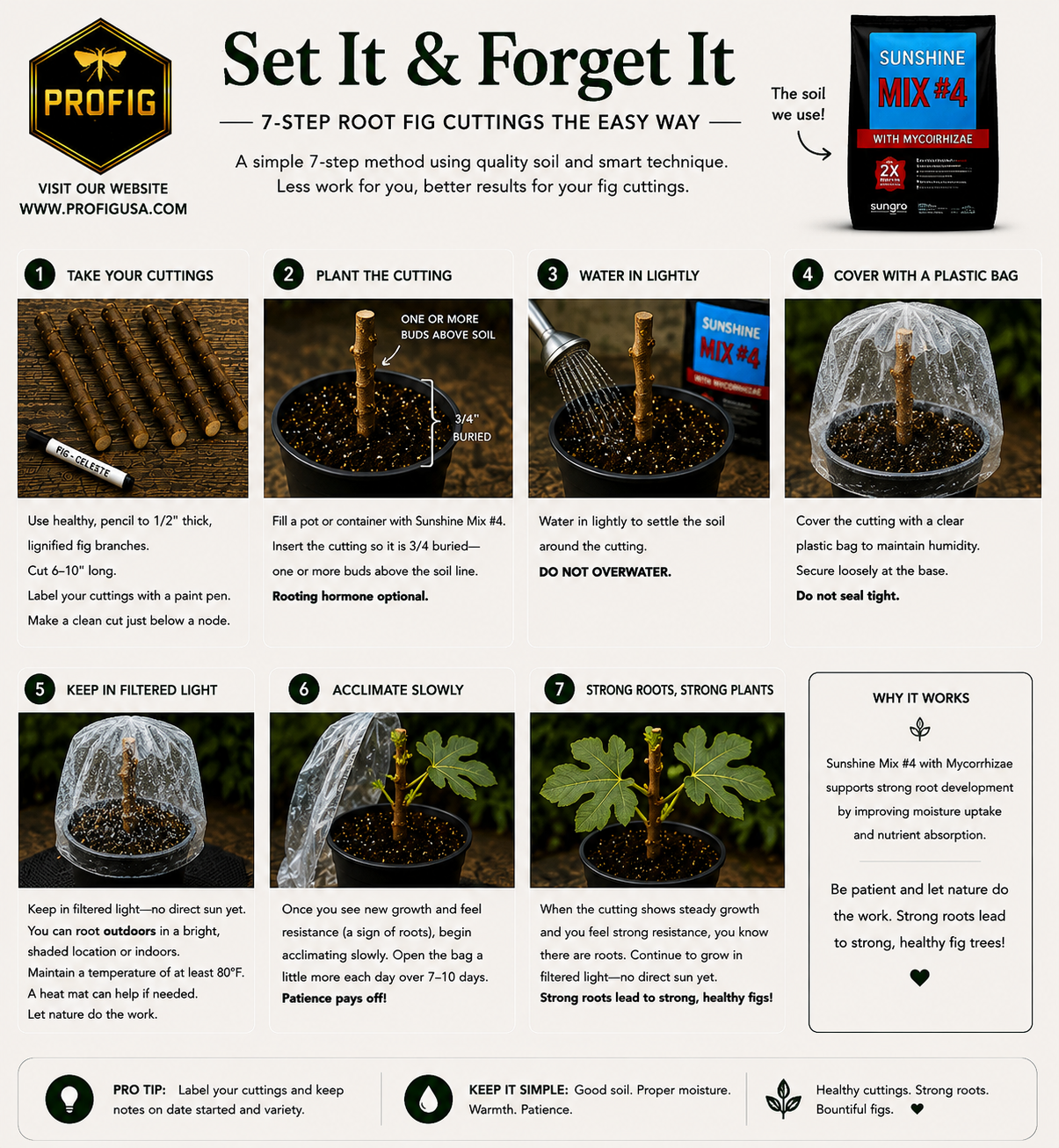
Rooting instructions are included in the listing photos. Please review them before purchasing.
Rooting success depends on many factors including temperature, humidity, rooting method, growing medium, sanitation, and grower experience.
While fig cuttings are generally considered easy to propagate, no rooting success can be guaranteed. Even experienced growers may experience occasional losses.
Most growers can expect a rooting success rate of approximately 60% to 80% under proper conditions. Individual results may vary.
Because rooting conditions are beyond our control after delivery, we cannot offer refunds, replacements, or credits for cuttings that fail to root.
Cuttings are carefully packaged to help ensure they arrive in excellent condition.
Thank you for supporting ProFig.
Only logged in customers who have purchased this product may leave a review.


Reviews
There are no reviews yet.